An ice dam on your roof can wreak havoc on your home. Fortunately, there are easy steps to follow, to get you through the winter damage-free.
What is an ice dam?
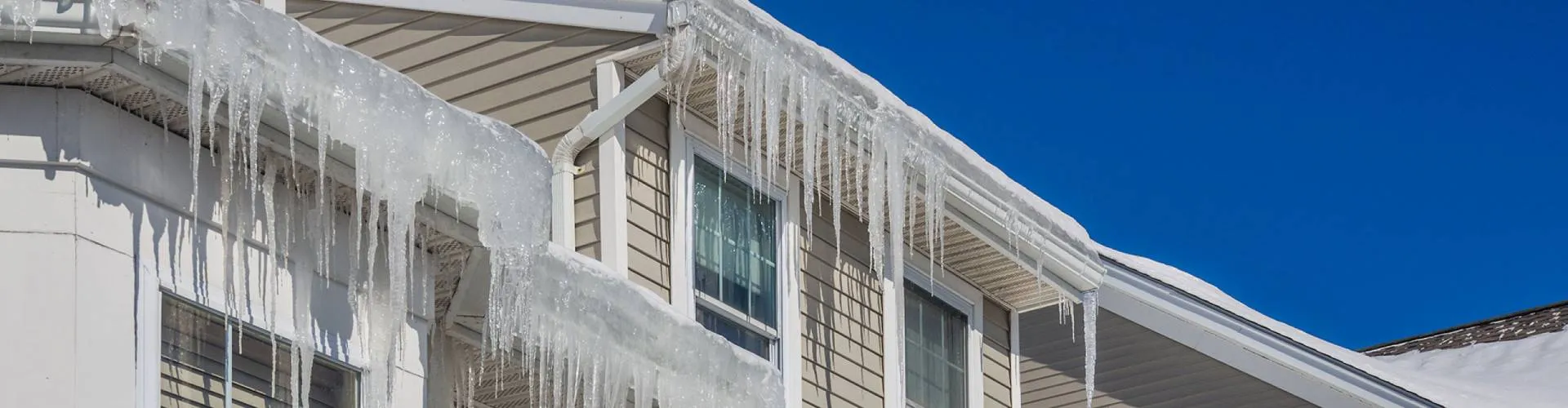
An ice dam is formed when melt water on your roof freezes before it can drain away. Generally speaking, problems occur when the highest portions of your roof are regularly above 0°C, and the lower portions of your roof are regularly below 0°C. The snow at the top melts and begins to flow downwards, but freezes onto your lower roof before it gets a chance to run off. An ice dam has now been formed. The dam then blocks the further run-off of water from above. The water that collects above the dam can seep and leak into your home causing damage to walls, ceilings, and insulation. Imagine an ice dam on your roof as your home’s version of a beaver dam, blocking waterways and channels, creating a back up.
Ice dams are caused by two factors, heat & snow.
Heat
As Canadians, we all heat our homes in winter. Hot air within the home rises, floating up to the ceiling. If the ceiling is not properly insulated, the warm air continues to rise into the attic above. This warm air then transfers to the roof, melting the snow. Most homes have peaked attics, so the warm air collects inside the peak, and the snow on the peak of your roof melts first. In many homes this is the main method of heat transfer that leads to the formation of ice dams.
Chimneys too, play their part.
Fireplace and wood stove chimneys allow heat to travel upwards, through the attic, to the roof. Duct work that is not properly insulated can also carry heat to your attic, where it then transfers to the roof. Even exhaust systems, like those in the kitchen and the bathroom, can contribute to ice dam formation. These fans and vents bring nice, toasty indoor air straight up and out to your roof, where they melt the snow.
Snow
Snow is the main ingredient of an ice dam. Without the snow, there would be nothing on your roof to create the problem. Removing snow from the roof with a roof rake helps prevent ice dams from forming. (Push brooms may also be used to remove snow, but could damage the roofing materials.)
What to do?
In an emergency situation where water is flowing into the house, make channels through the ice dam. These channels will allow the water behind the dam to flow from the roof. Exercise extreme caution doing this. Remember that the bottoms of your boots can be slippery on a ladder or a roof. Ladders and other raised platforms can shift easily in snow or on ice. Falling snow and ice can be a hazard in itself.
If concerned, give us a call or email us.
Long-term action
- Make your ceiling and attic duct work airtight so no warm air can escape to the attic.
- Increase ceiling and roof insulation to cut down on heat loss.
- Extend exhaust system vents on the roof, making them taller. If you live where there is a lot of snowfall, you may have to move them too.
Reducing the heat transfer can create natural roof ventilation that can help maintain uniform roof temperatures and prevent ice damming.
Please note: Mechanical attic ventilation IS NOT a recommended solution for ice dams as it can create other attic moisture problems. It may also cause undesirable negative pressure in the home, trapping stale, polluted air inside.
Keep your eyes peeled
Keep an eye on your roof as you leave and return home throughout the winter. Look for ice in a ridge along the edge of your roof. That ice may be an ice dam.
Also keep a lookout inside the home for seepage and dripping. If you see a leak from the walls or ceiling, remember this article for quick reference.